Managerial Changes Reshaping Fantasy Football Values in the Premier League
Parker Schmitt · Sep 27, 2026
Managerial Changes Reshaping Fantasy Football Values in the Premier League
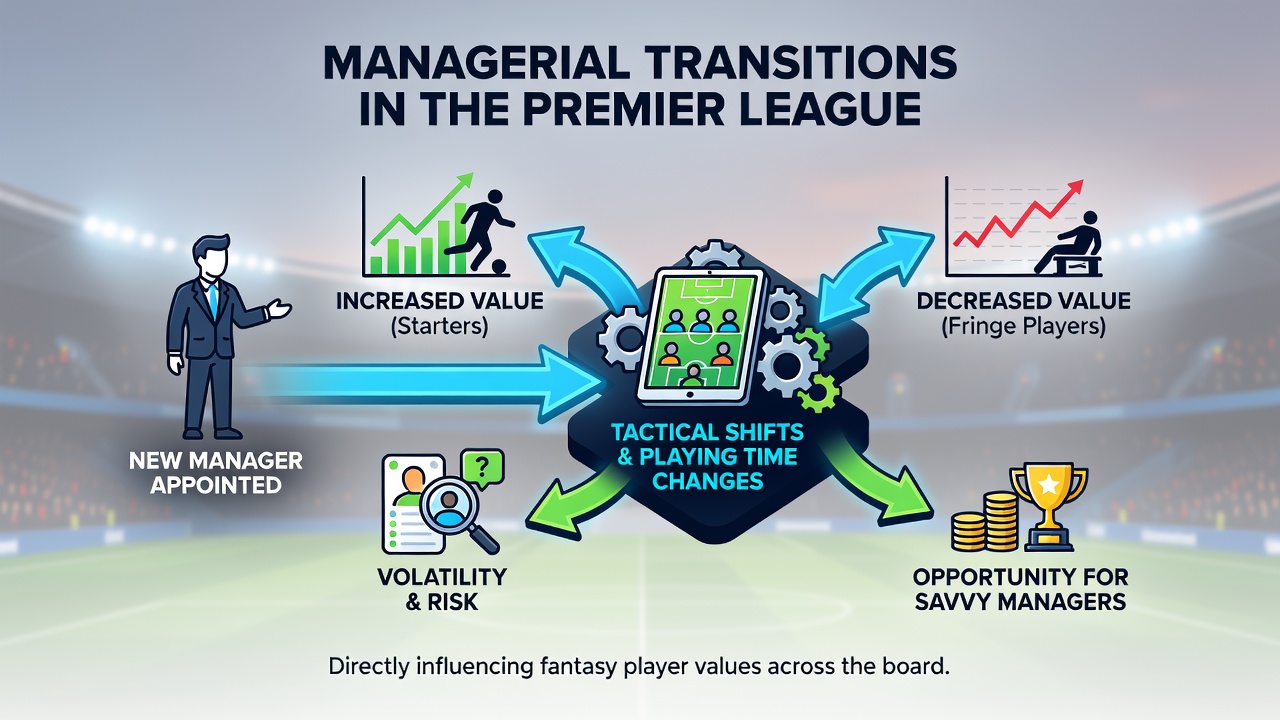
Managerial transitions in the Premier League frequently lead to immediate adjustments in squad selection and formation choices that alter player involvement across multiple positions. Data from recent seasons shows that clubs appointing new head coaches often experience a 15 to 25 percent shift in average minutes played for key attackers and defenders within the first six matches under the new regime. These patterns emerge because incoming managers typically implement preferred systems that reward certain profiles while sidelining others based on fitness, style fit, and tactical requirements.
Patterns Observed After Recent Appointments
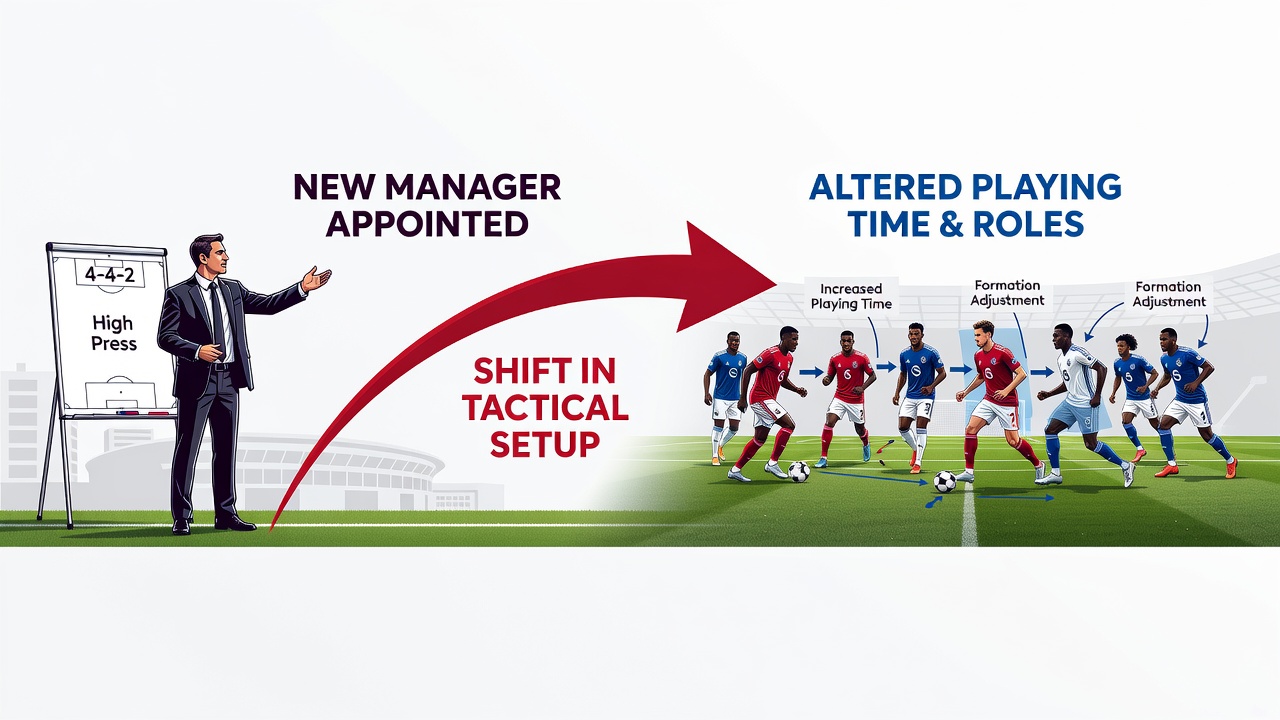
Historical records indicate that teams switching managers mid-season or during the summer window tend to favor players who align with high-pressing or possession-based approaches. For instance, a move from a 4-4-2 setup to a 3-4-3 formation commonly boosts the involvement of wing-backs and central midfielders who can carry the ball forward while reducing opportunities for traditional wide forwards. Researchers tracking performance metrics across the 2024-2025 and 2025-2026 campaigns have documented consistent rises in expected goal contributions for players newly integrated into these structures.
September 2026 brought several high-profile changes across the league, with three clubs confirming new appointments before the international break. Observers tracking these developments noted rapid rotations in starting lineups that directly affected availability for fantasy team selections. One club that had relied on a counter-attacking style shifted toward sustained build-up play, resulting in increased touches in the final third for central strikers and decreased long-ball opportunities for target men previously favored under the prior regime.
Tactical Adjustments and Position-Specific Impacts
New managers often prioritize different defensive lines and midfield structures, which changes the workload distribution among full-backs and centre-backs. A transition to a higher defensive block typically elevates the number of progressive passes completed by centre-backs while lowering clean-sheet probabilities for teams still adjusting to the new organization. Fantasy analysts examining these trends rely on data from sources such as UEFA technical reports to quantify how formation changes influence individual player statistics over time.
Attacking players face similar volatility when coaches alter service patterns from wide areas to central overloads. Wingers who previously benefited from overlapping runs may see reduced output if the new system emphasizes inverted forwards and double pivots in midfield. Studies compiled by academic groups including those affiliated with the University of Sydney's sports performance unit reveal that such shifts can produce measurable changes in shot creation metrics within four to eight weeks of implementation.
Data Sources and Performance Tracking
Comprehensive datasets maintained by league statisticians demonstrate that players experiencing increased minutes under a new manager average 2.3 additional fantasy points per game compared to their pre-transition output. Conversely, those whose roles diminish often record drops exceeding 30 percent in goal involvement. These figures become particularly relevant during transfer windows when clubs integrate new coaching staff and begin pre-season preparations.
Teams in the lower half of the table exhibit even sharper swings because limited squad depth amplifies the effect of each selection decision. Midfielders and forwards who adapt quickly to new instructions tend to secure regular starting berths, whereas others rotate in and out based on match-specific demands. Industry reports from organizations such as the Football Australia technical department have examined comparable patterns in domestic leagues to highlight how managerial philosophy influences player valuation models used by fantasy participants worldwide.
Longer-Term Effects Across Multiple Seasons
Over the course of an entire campaign, sustained changes in playing style can reshape entire position groups rather than isolated individuals. Defenders who gain responsibility for build-up distribution often record higher assist tallies, while those asked to focus solely on aerial duels may see their involvement in attacking phases decline. Fantasy scoring systems that reward both clean sheets and creative actions therefore register these evolving contributions through updated rankings and differential selections.
Clubs that maintain stability under one manager for multiple seasons provide useful baselines against which transition effects can be measured. Data comparisons show that the first ten matches after a change account for the majority of variance in player availability and output, after which squads typically stabilize around the new tactical identity. This timeline allows analysts to update projections once sufficient samples become available following each appointment.
Conclusion
Managerial transitions continue to serve as key inflection points that redistribute playing time and alter tactical responsibilities throughout Premier League squads. The resulting changes in minutes, formations, and role definitions produce measurable effects on the statistical profiles that determine fantasy asset values. Tracking these developments through performance data and formation records provides a factual basis for understanding how squad adjustments unfold after each coaching change.